Skip to main navigation Skip to main content Skip to page footer

Faculty of Philology

OFFERED SEMINARS

OFFERED SEMINARS

Information Literacy

Digital Skills
Artificial Intelligence Literacy

From Academic Research to Everyday Life

How can we distinguish reliable information? How do we evaluate different sources, cross-check claims and decide what we can trust?

We search for information every day, far beyond our university assignments. When comparing products, reading online reviews, learning about an issue or using Artificial Intelligence tools, we need to make choices in a complex information environment.

The Phil Info Lab seminars focus on the skills that help us search effectively, evaluate information critically and use it responsibly. Through practical activities, students become familiar with methods and tools that support learning and academic research but can also be applied in everyday life.

The Phil Info Lab seminars focus on the skills that help us search effectively, evaluate information critically and use it responsibly. Through practical activities, students become familiar with methods and tools that support learning and academic research but can also be applied in everyday life.

Finding information is not enough. We need to be able to evaluate it and form our own evidence-based judgements.

WHAT YOU WILL LEARN

Through interactive seminars and hands-on practice, you will have the opportunity to:

  • search for scholarly sources using effective search strategies;
  • use library catalogues, databases and other scholarly information resources;
  • evaluate the reliability, relevance and provenance of information;
  • organise and manage your references;
  • discover and experiment with digital tools and Artificial Intelligence applications;
  • critically examine the capabilities, limitations and outputs of these tools.

The skills developed are not limited to writing an academic assignment. They can be applied whenever you need to search for, compare and evaluate information in order to support your choices and decisions.

Good to Know

Each seminar is standalone, and a certificate of attendance is provided.

SEMINAR PROGRAMME 2026–2027

Winter Semester

Academic Research, Artificial Intelligence, Copyright & Open Knowledge

The Information Literacy Laboratory of the Department of Philology, National and Kapodistrian University of Athens (NKUA), offers two interactive seminars exploring academic research, the use of Artificial Intelligence (AI) tools, copyright, and Open Knowledge.

Through practical examples, live demonstrations, and short interactive activities, participants will explore strategies for finding and evaluating scholarly information, using AI tools critically, and understanding the principles of responsible use and sharing of digital content.

1. Academic Research & Artificial Intelligence Tools

From the research question to reliable scholarly sources

How do we develop a research question, find relevant scholarly sources, and use AI tools to support academic research effectively and critically?

The seminar covers:

  • Formulating research questions and identifying keywords.
  • Search strategies and searching academic databases.
  • Finding and evaluating scholarly sources.
  • Using AI tools to support the academic research process.
  • Critically evaluating and verifying AI-generated results.

2. Copyright & Creative Commons in the Age of AI

Creating, using, and sharing digital content knowledgeably and responsibly

Digital content is widely used in academic study, teaching, and research. Understanding copyright and licensing is essential for determining how works can be used, reused, and shared. The growing use of AI tools also raises new questions about the use of protected material and the rights associated with AI-generated content.

The seminar covers:

  • Fundamental principles of copyright.
  • Creative Commons licences and the terms of reuse.
  • Finding, using, and properly attributing digital content.
  • Open Knowledge and the responsible sharing of digital resources.
  • Copyright issues and challenges arising from the use of protected material and AI tools.

Seminar Format

Both seminars are free of charge, face-to-face, and two hours long. They combine practical examples, live demonstrations, and interactive activities. A certificate of attendance is provided.
SEMINARS BY ARRANGEMENT

The needs of each department, course or student group may differ.

By arrangement, the Lab can organise targeted workshops tailored to specific educational or research needs.

Topics may include, for example:

  • searching for and evaluating scholarly information;
  • specific catalogues, databases or electronic resources;
  • reference management and organisation;
  • digital tools for learning and academic research;
  • Artificial Intelligence tools and applications;
  • specific needs arising from a course, assignment or research topic.

The duration, topics and examples are adapted to the subject area and the needs of the participants.

E-CLASS AND EDUCATIONAL MATERIALS

To support the learning process, the Lab uses the e-class platform, where the relevant course and educational materials are available.

Information Literacy Seminars(Autumn & Spring Semester 2026–2027) (PHIL1794)

THE EVOLUTION OF OUR SEMINARS

The Lab’s seminars evolve in response to students’ needs and changes in the academic and technological environment.

2023–2024 | The Foundations of Information Literacy

In the first year, the seminars focused on the fundamental skills needed to search for and use scholarly information, manage and evaluate sources, and write academic papers.

Student feedback highlighted the need for more hands-on practice, additional examples and specialised seminars.

2024–2025 | Specialisation and an Introduction to Artificial Intelligence

The programme expanded to include thematic seminars for specific academic disciplines, workshops on search strategies and reference management, and activities introducing students to Artificial Intelligence through a combination of theoretical discussion and practical application.

Evaluations highlighted further needs for practical examples, specialised tools and applications of AI in academic research.

2025–2026 | Contemporary Research Practices and New Tools

The programme was enriched by connecting traditional scholarly information resources with contemporary AI tools, exploring AI-assisted reference management and digital research in the Humanities. Developments from conversational AI tools to AI agents were also examined.

An Evolving Educational Approach

The programme develops by connecting the fundamental principles of Information Literacy with new technologies and students’ needs. The aim is to familiarise students with contemporary tools without losing sight of critical information evaluation and responsible use.

ARCHIVE OF PREVIOUS SEMINARS

A look back at the seminars delivered in previous academic years.

2025–2026

Winter Semester

  • How Do We Search Smarter Today? From Library Catalogues to Artificial Intelligence
  • Reference Management with Artificial Intelligence Tools

Spring Semester

  • Exploring Artificial Intelligence: Myths and Facts
  • Digital Research in the Humanities: Where and How to Find Scholarly Sources
  • From ChatGPT to AI Agents: How Artificial Intelligence Is Evolving and What It Means for the Humanities

2024–2025

Winter Semester

  • Scholarly Information Search Strategies
  • Reference Management Using Selected Tools
  • Online Catalogues and Resources for Classical Studies
  • Online Catalogues and Resources for Folklore Studies

Spring Semester

  • Exploring Artificial Intelligence — Theoretical and Practical Sessions

2023–2024

Information Literacy Seminar

The first year of the seminar programme focused on the fundamental principles of searching for and using scholarly information, managing and evaluating sources, and writing academic papers.

FROM ACADEMIC RESEARCH TO EVERYDAY LIFE

Information Literacy is not limited to searching for scholarly sources. Research skills — comparing information, evaluating sources, cross-checking claims and supporting decisions with evidence — can also inform the choices we make in everyday life.

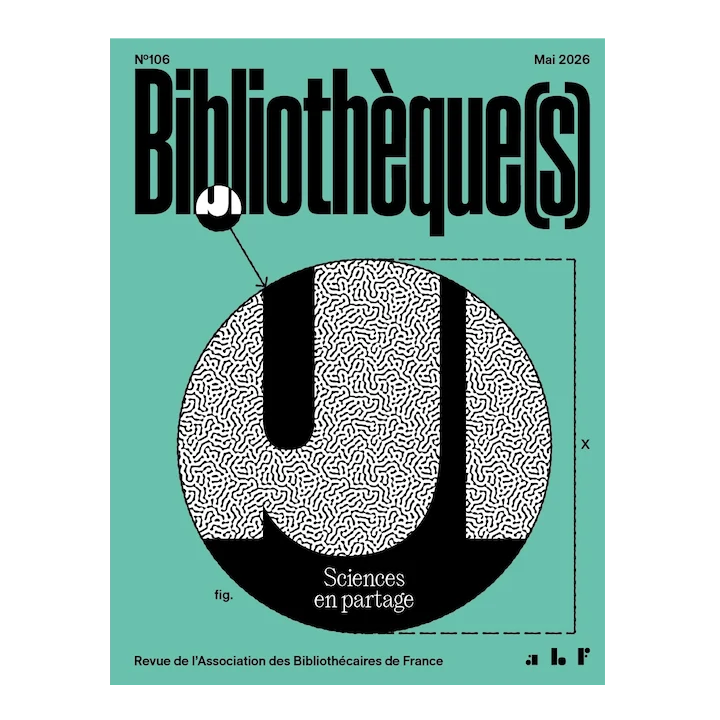
This approach is also explored in an article by Kiki Papadopoulou published in the French journal Bibliothèque(s).

Papadopoulou, K. (2026, May). La culture de l'information comme fondement d'une citoyenneté critique. Bibliothèque(s), (106), 61.

Read the full article (PDF)

CONTACT

For information about the seminars or to arrange a targeted workshop, please contact the Informatics Laboratory of the Department of Philology.

Seminar design, organisation and delivery:
Kyriaki (Kiki) Papadopoulou, M.Sc., Special Technical Laboratory Staff (ETEP)

📍 Informatics Laboratory
Department of Philology – School of Philosophy
New Wing 801, Room 1, 8th Floor
University Campus, Zografou, 157 72 Athens, Greece

📧 philinfolab@phil.uoa.gr
☎ +30 210 727 7660

Scan the QR code or follow the link below to stay up to date with the Lab’s activities.

🔗 All our channels in one link